

Best local consultation fit: Neo Fertility for patients in Marathahalli and Whitefield. Best assessment route for complex sperm findings: a fertility consultation with male-factor expertise. Best route after an unsuccessful cycle: a documented cycle review before another treatment decision. If you are searching for the best ICSI treatment in Bangalore in 2026, choose by clinical need—not an unsupported clinic ranking.
- Neo Fertility offers ICSI consultations for patients in Marathahalli and Whitefield, Bangalore.
- The best ICSI treatment in Bangalore starts with a clear reason to choose ICSI over conventional IVF.
- Complex sperm findings need male-factor assessment alongside fertility planning.
- After an unsuccessful cycle, review the embryology record before deciding what should change.
Why this matters
ICSI means intracytoplasmic sperm injection: an embryologist injects a single sperm into an egg during IVF treatment. It addresses the fertilisation step. It does not guarantee an embryo, implantation or a live birth.
Neo Fertility is a local ICSI consultation option for patients in Marathahalli and Whitefield, Bangalore. The clinic is led by Dr. Payal Mahapatra and offers IVF, IUI, ICSI, egg freezing and PCOS care.
A clinic offering ICSI is not the same as ICSI being the right treatment for you. Your consultation should establish the diagnosis, explain the alternatives and separate the chance of fertilisation from the chance of taking home a baby.
This 2026 guide ranks consultation routes by patient need. It does not assign an overall clinical winner or compare unverified clinic success rates.
What makes the best ICSI treatment centre?
Assess these criteria before choosing where to begin:
- Clinical indication: The doctor explains why ICSI fits your findings rather than presenting it as the automatic next step.
- Male-factor assessment: Abnormal semen findings receive appropriate evaluation, with specialist input when needed.
- Embryology clarity: The team explains egg maturity, fertilisation, embryo development and how those stages affect decisions.
- Outcome transparency: Success figures distinguish pregnancy from live birth and identify the patient group and denominator.
- Treatment continuity: You know who reviews results, explains changes and handles questions between appointments.
- Practical access: Monitoring visits, procedures and follow-up fit your travel and support arrangements.
Ask for answers specific to your case. A polished explanation of ICSI does not establish that you need it, and a clinic-wide percentage does not describe your individual prognosis.
ICSI consultation routes at a glance
| Rank and option | Best for | Standout decision point | Key limitation |
|---|---|---|---|
| 1. Neo Fertility | Local consultation in Marathahalli and Whitefield | Discussing ICSI alongside the clinic's stated fertility services | Location and service range do not establish comparative outcomes |
| 2. Male-factor specialist assessment | Complex or repeatedly abnormal sperm findings | Understanding the sperm-related diagnosis before treatment selection | Assessment does not replace egg, uterine or overall fertility evaluation |
| 3. Previous-cycle review | An unsuccessful IVF or ICSI cycle | Identifying where the previous cycle stopped progressing | Records can clarify events without producing a definite explanation |
The first option is a named local clinic. The other options describe assessment needs, not additional named centres. Use the table to decide what your next appointment must resolve.
1. Neo Fertility: best for a local ICSI consultation
Best for: Patients seeking fertility assessment in Marathahalli and Whitefield.
Neo Fertility offers ICSI as part of its stated fertility services under Dr. Payal Mahapatra. Its service range also includes IVF, IUI, egg freezing and PCOS care, which gives you several treatment topics to discuss during an assessment.
That range is relevant when you arrive without a confirmed treatment plan. Ask which findings support ICSI, which alternatives remain appropriate and what further evaluation is necessary before choosing a procedure.
Neo Fertility pros
- A named fertility clinician leads the clinic.
- ICSI is explicitly included in its services.
- Its stated patient areas include Marathahalli and Whitefield.
- Its services include other fertility treatments that you can discuss when considering alternatives.
Neo Fertility limitations
- Its location and service list do not establish that it has better outcomes than another centre.
- An ICSI service listing does not establish that ICSI is appropriate for your diagnosis.
Questions to take to the consultation
Start with the reason for treatment: “What finding makes ICSI appropriate in my case?” Then ask whether conventional IVF is a reasonable alternative and what information would change the recommendation.
Request an explanation of the planned sequence, including monitoring, egg retrieval, fertilisation assessment and the later decision about embryo transfer. Confirm who explains results at each stage rather than assuming the same person handles every appointment.
Verdict: Hold the treatment decision until the consultation establishes a clinical reason for ICSI.
2. Male-factor assessment: best for complex sperm findings
Best for: Patients with severe or repeatedly abnormal semen findings, or questions about sperm retrieval.
ICSI is commonly used for significant male-factor infertility. The procedure helps an individual sperm fertilise an egg, but selecting it does not remove the need to understand the sperm-related diagnosis.
Choose an assessment route that can explain the semen findings and identify when reproductive urology or andrology input is appropriate. A fertility specialist should also consider the other partner's evaluation when planning treatment.
Male-factor assessment pros
- Keeps the underlying diagnosis in view rather than treating ICSI as the entire answer.
- Creates space to discuss whether additional investigations are indicated.
- Connects sperm-related planning with the broader fertility plan.
Male-factor assessment limitations
- Further assessment does not guarantee that sperm findings will improve.
- A sperm-focused consultation alone cannot establish the complete treatment plan.
What a useful explanation covers
Ask what the semen result means, whether a repeat sample is needed and whether the history suggests specialist assessment. If sperm retrieval is being discussed, request a separate explanation of the procedure, its risks and how its outcome affects the IVF plan.
Avoid choosing a centre solely because it uses a particular laboratory term. The useful distinction is whether the team explains your diagnosis and coordinates the necessary care.
Verdict: Hold the procedure decision until the male-factor findings and any referral needs are explained.
3. Previous-cycle review: best after an unsuccessful attempt
Best for: Patients whose IVF or ICSI cycle did not produce the hoped-for outcome.
An unsuccessful cycle is not a single diagnosis. Low fertilisation, limited embryo development, no transferable embryo and an unsuccessful transfer are different events that require different discussions.
Before choosing another centre or repeating treatment, obtain a stage-by-stage review. A change of clinic is not, by itself, an explanation of what should change medically.
Previous-cycle review pros
- Uses your actual treatment history rather than a generic treatment package.
- Separates fertilisation findings from later embryo and transfer outcomes.
- Helps you ask what a proposed change is intended to address.
Previous-cycle review limitations
- Even detailed records do not always reveal a definite cause.
- A different treatment plan cannot guarantee a different outcome.
Records to request
Bring the stimulation summary, egg retrieval findings, egg maturity information, fertilisation record, embryo development report and transfer details where applicable. Include relevant test results and any discharge or follow-up notes.
Ask the reviewing specialist to distinguish observations from explanations. “No embryo reached transfer” describes an outcome; it does not, on its own, establish why that happened or prove that a particular additional treatment will help.
Verdict: Hold repeat treatment until the previous cycle and the reason for each proposed change have been reviewed.
How these consultation routes are ranked
The order follows the decision you need to make: identify a local consultation option, investigate a complex sperm-related concern or review an earlier cycle. It is not a ranking of laboratory quality or live-birth outcomes.
For a 2026 shortlist, apply the same criteria to every centre: clinical indication, appropriate assessment, clear embryology explanations, interpretable outcomes and practical follow-up. Reject comparisons that use a success percentage without explaining what it measures.
ICSI versus conventional IVF: ask the right question
In conventional IVF, eggs and sperm are placed together for fertilisation. In ICSI, an embryologist injects a sperm directly into an egg. Both approaches sit within an IVF treatment cycle.
| Fertilisation approach | Best for discussion when | Main advantage | Main limitation |
|---|---|---|---|
| Conventional IVF | The assessment supports allowing sperm to fertilise eggs without injection | Avoids direct sperm injection into each egg | Fertilisation can still fail |
| ICSI | Significant male-factor infertility or previous fertilisation findings support its use | Directly introduces a sperm into an egg | Injection does not guarantee fertilisation or live birth |
ICSI is a fertilisation method, not proof of a better overall outcome for every patient. Ask what evidence supports its use in your circumstances and what uncertainty remains.
Turn your consultation into a clear decision
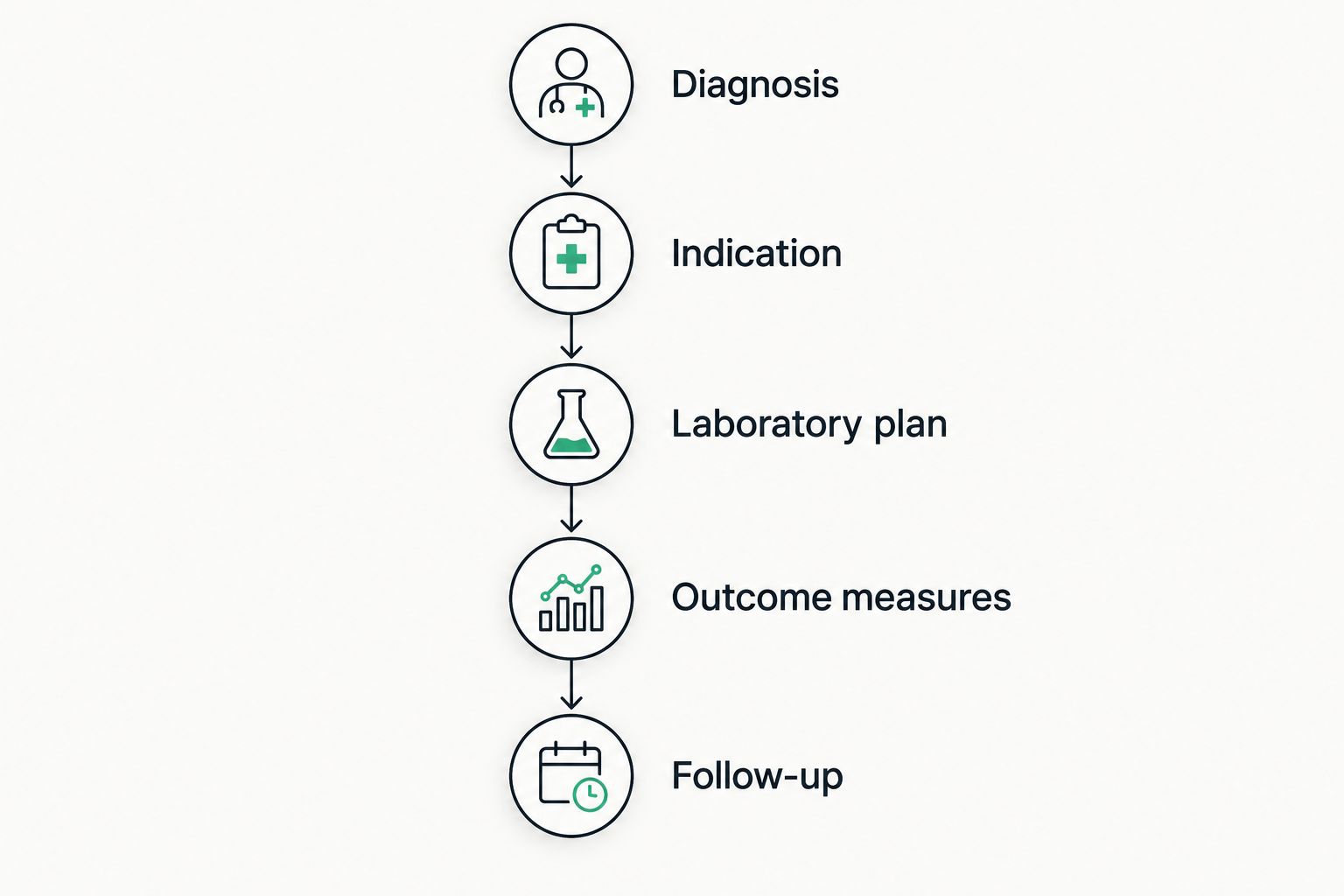
Use this sequence before consenting to treatment. Each step should leave you with an explanation you understand, not just a procedure name.
Diagnosis
Ask the specialist to describe the identified fertility factors and any unresolved questions. If the diagnosis is unexplained infertility, ask how that affects the reasoning for the proposed fertilisation method.
Indication
Ask why ICSI is being recommended rather than conventional IVF or another appropriate route. Request a case-specific answer tied to your test results, history or previous treatment.
Laboratory plan
Discuss what happens after egg retrieval and how the clinic communicates fertilisation and embryo development findings. Ask which decisions are made before the cycle and which depend on results during treatment.
Outcome measures
Ask whether a stated success figure means a positive pregnancy test, clinical pregnancy or live birth. Then ask whether the denominator is a started cycle, egg retrieval or embryo transfer, and whether the figure applies to a comparable patient group.
Follow-up
Confirm who explains results and how to raise concerns after a procedure. Before leaving, make sure you understand the next decision and the information needed to make it.
When should you seek a fertility assessment?
Common clinical guidance recommends evaluation after 12 months of trying to conceive when the female partner is under 35 years, or after 6 months at 35 years or older. Above 40 years, seek prompt medical advice rather than waiting through those intervals.
Seek earlier assessment when there is a known fertility concern, irregular or absent periods, or a relevant medical history. These timings guide when to seek evaluation; they do not determine whether you need ICSI.
For your 2026 appointment, bring previous results rather than relying on memory. A written history of treatment, menstrual patterns, relevant conditions and current medicines helps the specialist decide what needs clarification.
Which ICSI consultation route should you choose?
Choose Neo Fertility for a local ICSI consultation if you are seeking care in Marathahalli or Whitefield. Use the appointment to establish whether ICSI fits your diagnosis, not to confirm a decision made from a search result.
Choose a male-factor assessment route when the main unresolved issue concerns sperm findings. Choose a previous-cycle review when treatment has already been unsuccessful and you need a reasoned explanation of the next plan.
The strongest choice in 2026 is the consultation that answers your clinical question clearly. A “best centre” label cannot replace that answer.
FAQ
What's the best ICSI treatment in Bangalore for me?
The best ICSI treatment in Bangalore is the treatment supported by your diagnosis and assessment. Neo Fertility is a local consultation option for patients in Marathahalli and Whitefield; ask why ICSI is appropriate before consenting.
Is ICSI better than conventional IVF?
ICSI is not better than conventional IVF for every patient. It is commonly used for significant male-factor infertility and selected fertilisation concerns, but it does not guarantee a higher live-birth chance in every situation.
Does ICSI guarantee fertilisation or pregnancy?
ICSI guarantees neither fertilisation nor pregnancy. Egg maturity, sperm factors, embryo development and other clinical factors still affect the outcome.
Should I choose ICSI after an unsuccessful IVF cycle?
An unsuccessful IVF cycle does not automatically mean you need ICSI. Ask whether the problem involved fertilisation, embryo development or a later stage, because the reason for changing treatment depends on that distinction.
What should I bring to an ICSI consultation?
Bring previous fertility test results, semen reports, relevant medical records and details of any earlier treatment. If you have undergone IVF or ICSI, include embryology and transfer reports where available.
How do I compare ICSI success rates between clinics?
Compare figures only when they use the same outcome, denominator and a comparable patient group. A pregnancy rate per embryo transfer is not the same measure as a live-birth rate per started cycle.
Can patients with PCOS need ICSI?
PCOS alone does not establish a need for ICSI. Treatment selection depends on the complete assessment, including ovulation, sperm findings and any previous treatment history.
One last thing
Ask what happens before embryo transfer—not just what happens after it. A success figure reported per transfer describes patients who reached that stage; it does not describe every person who started treatment.
Write that question at the top of your consultation notes. It helps you compare explanations rather than promotional percentages. This guide supports consultation preparation and does not replace individual medical advice.