
Best fit for an IVF-focused consultation: Dr. Payal Mahapatra at Neo Fertility, a fertility clinic serving Whitefield and Marathahalli. If you are searching for the best fertility specialist in Whitefield in 2026, choose by diagnosis, treatment explanation and continuity of care—not by a ranking that treats every patient’s needs as identical.
- For the best fertility specialist in Whitefield, consider Dr. Payal Mahapatra for an IVF-focused consultation.
- Neo Fertility offers IVF, IUI, ICSI, egg freezing and PCOS care for patients in Whitefield and Marathahalli.
- Choose a fertility treatment pathway after assessment, not because a clinic lists more procedures.
- Ask who manages your care, why treatment is recommended and what alternatives remain.
Why this matters
A fertility specialist’s recommendation should answer a specific question: what is preventing pregnancy, and which next step addresses it? IVF, IUI and ICSI are not interchangeable treatments. Egg freezing serves a different purpose, while PCOS care does not automatically mean assisted reproduction.
For your 2026 shortlist, separate the choice of doctor from the choice of procedure. This guide identifies a named local consultation option, then compares five care pathways by purpose. The order is a reading guide, not a recommendation to start with IVF or progress through every treatment.
Dr. Payal Mahapatra at Neo Fertility is a relevant consultation option for Whitefield patients seeking IVF, IUI, ICSI, egg freezing or PCOS care. Treatment suitability still requires an individual medical assessment.
What makes the best fertility specialist for your needs?
Use these criteria before comparing clinic names. A good consultation makes the reasoning understandable; a longer service list does not establish better care.
- Diagnostic clarity: Ask what is known, what remains uncertain and which tests would change the treatment decision.
- Treatment fit: Request an explanation of why the recommended procedure fits your circumstances and why alternatives do not.
- Partner assessment: Where relevant, fertility evaluation should consider both partners rather than focus exclusively on one person.
- Outcome transparency: Ask whether any quoted outcome means pregnancy or live birth, and which patient group it describes.
- Care continuity: Establish who explains results, reviews treatment changes and answers clinical questions between appointments.
- Practical access: Confirm where consultations, monitoring and procedures take place before planning repeated journeys from Whitefield.
Treat these as questions to resolve, not qualities to assume from a website. Apply the same checklist to every specialist on your shortlist.
Fertility care pathways at a glance
The following options address different clinical goals. Each is offered by the clinic described above, but listing a service does not establish that it is appropriate for you.
| Care pathway | Best for | What it does | Key limitation |
|---|---|---|---|
| IVF-led consultation | Understanding whether IVF is indicated | Reviews suitability for fertilisation outside the body and embryo transfer | Treatment involves medication, monitoring and procedures |
| IUI assessment | Checking suitability for insemination | Evaluates placing prepared sperm into the uterus around ovulation | Not suitable for every cause of infertility |
| ICSI assessment | Understanding a specific fertilisation method | Reviews whether injecting a sperm into an egg is appropriate within IVF | Does not resolve every cause of unsuccessful treatment |
| Egg-freezing consultation | Planning fertility preservation | Explains collecting and freezing unfertilised eggs | Does not guarantee a future pregnancy |
| PCOS care | Assessing irregular ovulation and related concerns | Connects symptom assessment with reproductive goals | PCOS does not explain every fertility difficulty |
1. IVF-led consultation: best for understanding an IVF recommendation
An IVF consultation helps you establish whether in vitro fertilisation addresses your diagnosis. IVF involves fertilising eggs outside the body and, when appropriate, transferring an embryo into the uterus.
The useful starting point is not choosing an IVF package. It is understanding why IVF belongs in your treatment discussion, what investigations support that recommendation and what other options remain.
IVF-led consultation pros:
- Provides space to review the reasons behind an IVF recommendation.
- Helps you understand stimulation, egg collection, fertilisation and embryo transfer.
- Creates an opportunity to discuss treatment burden and individual risks before consenting.
IVF-led consultation cons:
- IVF involves medical procedures and ongoing monitoring.
- Starting treatment does not guarantee an embryo suitable for transfer or a live birth.
Best for: Patients advised to consider IVF, or those seeking a clear explanation of whether it is appropriate.
Ask the specialist what finding makes IVF preferable to an alternative. Also ask which decisions are settled before treatment and which depend on your response during the cycle.
Verdict: Hold the treatment decision until the indication, alternatives and risks are clear.
2. IUI assessment: best for checking insemination suitability
Intrauterine insemination places prepared sperm into the uterus around ovulation. An IUI assessment considers whether this approach fits the clinical picture, including ovulation, semen findings and tubal factors.
IUI is not simply a compulsory step before IVF. Your specialist should explain when it is reasonable and when it would fail to address the underlying problem.
IUI assessment pros:
- Distinguishes suitability for insemination from suitability for IVF.
- Gives you a chance to discuss cycle timing and monitoring.
- Helps establish when the treatment plan should be reviewed.
IUI assessment cons:
- IUI does not overcome every tubal or sperm-related problem.
- Timing, appointments and sometimes medication remain part of treatment.
Best for: Patients whose evaluation supports considering insemination rather than moving directly to IVF.
Ask how the specialist will judge whether another attempt remains reasonable. A clear reassessment plan is more useful than an open-ended instruction to keep trying the same approach.
Verdict: Hold until the specialist confirms that IUI addresses your circumstances.
3. ICSI assessment: best for understanding fertilisation choices
Intracytoplasmic sperm injection is a laboratory technique used within IVF. An embryologist injects a single sperm into an egg rather than relying on sperm to fertilise the egg through conventional insemination.
ICSI is not a separate answer to every fertility problem. The decision should connect to your clinical circumstances, including relevant sperm findings or previous fertilisation history.
ICSI assessment pros:
- Clarifies the distinction between IVF and the fertilisation method used within it.
- Makes the reason for recommending sperm injection explicit.
- Allows discussion of prior fertilisation results when those records exist.
ICSI assessment cons:
- ICSI does not guarantee fertilisation, embryo development or pregnancy.
- The technique does not remove the other medical steps involved in IVF.
Best for: Patients told that ICSI is recommended and who need to understand the specific indication.
Ask a direct question: why is ICSI being recommended instead of conventional IVF fertilisation in your case? The answer should concern your assessment, not a claim that the more technical-sounding option is automatically better.
Verdict: Skip the assumption that ICSI is an automatic upgrade; assess the indication.
4. Egg-freezing consultation: best for fertility-preservation planning
Egg freezing involves collecting and freezing unfertilised eggs for possible future use. A consultation should explain the medical process, the relevance of age at freezing and the uncertainty surrounding future outcomes.
The decision is about preserving a reproductive option. It is not a promise that you can postpone every fertility-related consideration without consequence.
Egg-freezing consultation pros:
- Helps you understand the procedure before making a preservation decision.
- Creates space to discuss personal timing and reproductive goals.
- Explains how frozen eggs would be used if you later choose to use them.
Egg-freezing consultation cons:
- Egg collection involves ovarian stimulation, monitoring and a procedure.
- Frozen eggs do not guarantee a future pregnancy or live birth.
Best for: People considering fertility preservation who want an individual assessment rather than a general reassurance.
For a 2026 consultation, ask about both the collection process and the later steps required to use stored eggs. Request an explanation of storage arrangements and consent requirements before making a decision.
Verdict: Hold until you understand the procedure, future use and limitations.
5. PCOS care: best for assessing irregular ovulation
Polycystic ovary syndrome can affect ovulation, but a PCOS diagnosis does not automatically mean you need IVF. Care should reflect your symptoms, reproductive goals and any other findings relevant to fertility.
If pregnancy is your goal, ask whether ovulation is occurring and what else needs assessment. Avoid letting one diagnosis replace an evaluation of the broader picture.
PCOS care pros:
- Connects menstrual and ovulation concerns with your reproductive plans.
- Supports discussion of treatment aimed at the identified problem.
- Provides a starting point for reviewing associated health concerns.
PCOS care cons:
- A PCOS diagnosis alone does not explain every difficulty conceiving.
- Managing symptoms and achieving pregnancy are related but distinct goals.
Best for: Patients with PCOS, irregular cycles or questions about ovulation and conception.
Bring previous reports and a menstrual history if available. Ask which findings support the diagnosis and whether another factor requires investigation before treatment starts.
Verdict: Skip the assumption that PCOS means IVF; start with an individual assessment.
How the pathways are ranked
The comparison prioritises the clinical question each consultation answers: IVF suitability, insemination suitability, fertilisation method, fertility preservation or ovulation concerns. No pathway wins for every patient.
For the best fertility specialist in Whitefield in 2026, use the criteria above to assess the recommendation itself. A named doctor, a clear explanation and an appropriate treatment plan matter more than an unsupported “best clinic” label.
Prepare for a useful first consultation
Give the specialist enough context to explain the next decision. You do not need to arrive with a self-selected treatment plan.
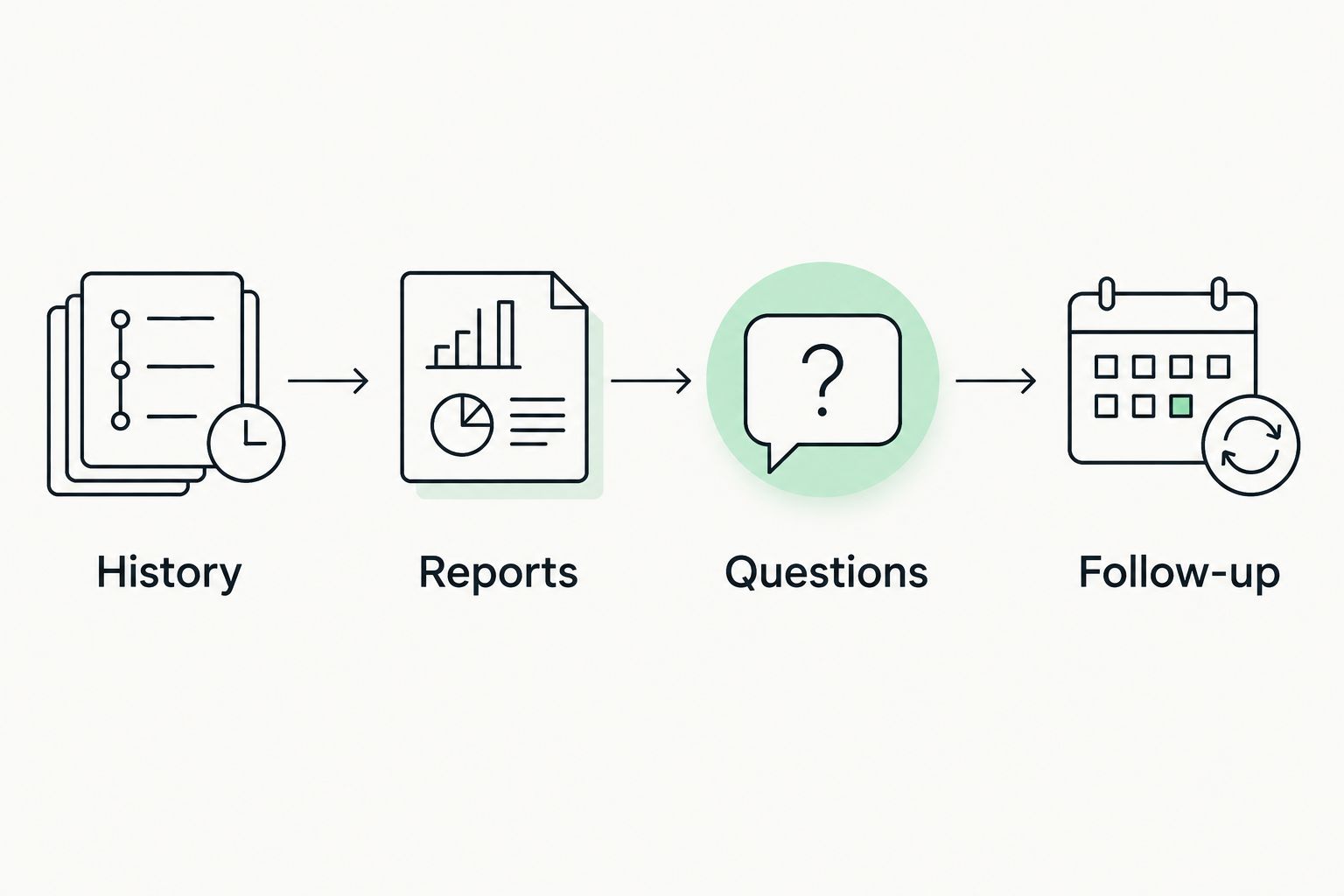
- History: Summarise how long you have been trying, menstrual patterns, relevant diagnoses, medicines and previous pregnancies.
- Reports: Bring existing test results and treatment records so the specialist can review what has already been investigated.
- Questions: Write down why a treatment is being considered, what alternatives exist and what would change the plan.
- Follow-up: Confirm how results will be explained and which appointment or decision comes next.
For your 2026 appointment, separate questions about diagnosis from questions about procedures. First establish the problem being addressed; then discuss the treatment proposed to address it. This keeps the consultation focused even when you arrive with several competing recommendations.
When should you seek a fertility assessment?
The American Society for Reproductive Medicine’s patient guidance uses age and time trying to conceive as starting points. If you are younger than 35 years, seek evaluation after 12 months of trying without pregnancy; from 35 years, seek evaluation after 6 months.
Those thresholds are not instructions to delay care when a known concern exists. Irregular or absent periods, a known fertility-related condition or a relevant medical history justify discussing assessment earlier. People over 40 years should seek prompt advice rather than wait through a standard trying period.
A consultation is an assessment, not a commitment to treatment. Use it to understand whether investigation is needed now and what the findings would change.
Which fertility specialist should you choose?
For a Whitefield patient considering the services listed here, Dr. Payal Mahapatra at Neo Fertility is a relevant starting point. The clinic’s stated scope includes IVF, IUI, ICSI, egg freezing and PCOS care, with patients served in Whitefield and Marathahalli.
Choose the consultation that answers your immediate question. If you have no established diagnosis, seek assessment rather than arrive committed to IVF. If another specialist has already recommended treatment, bring the reasoning and reports for review.
Before finalising your 2026 choice, confirm the appointment location, who will review your results and how the proposed treatment connects to your findings. Do not infer procedure locations or care arrangements from the area a clinic serves.
FAQ
Who should I consider for a fertility consultation in Whitefield?
Dr. Payal Mahapatra at Neo Fertility is a relevant option for patients in Whitefield seeking IVF, IUI, ICSI, egg freezing or PCOS care. Choose a specialist by the explanation of your diagnosis and treatment options, not by an unsupported ranking.
How do I choose the best fertility specialist in Whitefield?
Choose a specialist who explains your assessment, the reason for recommending treatment and the alternatives. Confirm who manages follow-up and where appointments and procedures take place.
Do I need IVF if I have PCOS?
PCOS does not automatically mean you need IVF. The appropriate plan depends on ovulation, other fertility findings and your reproductive goals.
Is ICSI better than standard IVF?
ICSI is a fertilisation technique used within IVF, not an automatic improvement for every patient. Ask what finding supports its use in your case.
When should I see a fertility specialist?
Seek evaluation after 12 months of trying if you are younger than 35 years, or after 6 months from age 35. Discuss assessment earlier if you have irregular periods, a known concern or a relevant medical history; people over 40 should seek prompt advice.
Does egg freezing guarantee a future pregnancy?
Egg freezing does not guarantee a future pregnancy or live birth. A consultation should explain the collection process, future use and factors relevant to your individual outlook.
What should I bring to my first fertility appointment?
Bring existing reports, treatment records, a medication list and relevant menstrual and pregnancy history. Write down your main questions so the consultation addresses the decision you need to make.
One last thing
Ask this before agreeing to treatment: What result or finding would make you recommend a different plan? The answer helps you understand whether the recommendation responds to your circumstances and when it should be reconsidered.
A fertility consultation should leave you with a clearer next decision, not simply a procedure name. Use this guide to prepare questions; individual treatment decisions belong with your treating specialist.